For your
GRAMMY®
consideration
Best Classical Compendium
Yogis of Ukraine
Sandrine Rudaz, composer & conductor · Tina Guo, cello
Best Classical Compendium
Yogis of Ukraine
Sandrine Rudaz, composer & conductor · Tina Guo, cello
Seventy-seven minutes for string orchestra and four soloists, most of the pieces taking their titles from the words of Ukrainian women who kept practising and teaching yoga through the invasion. Built on four themes: war, Ukraine, yoga, awakening.
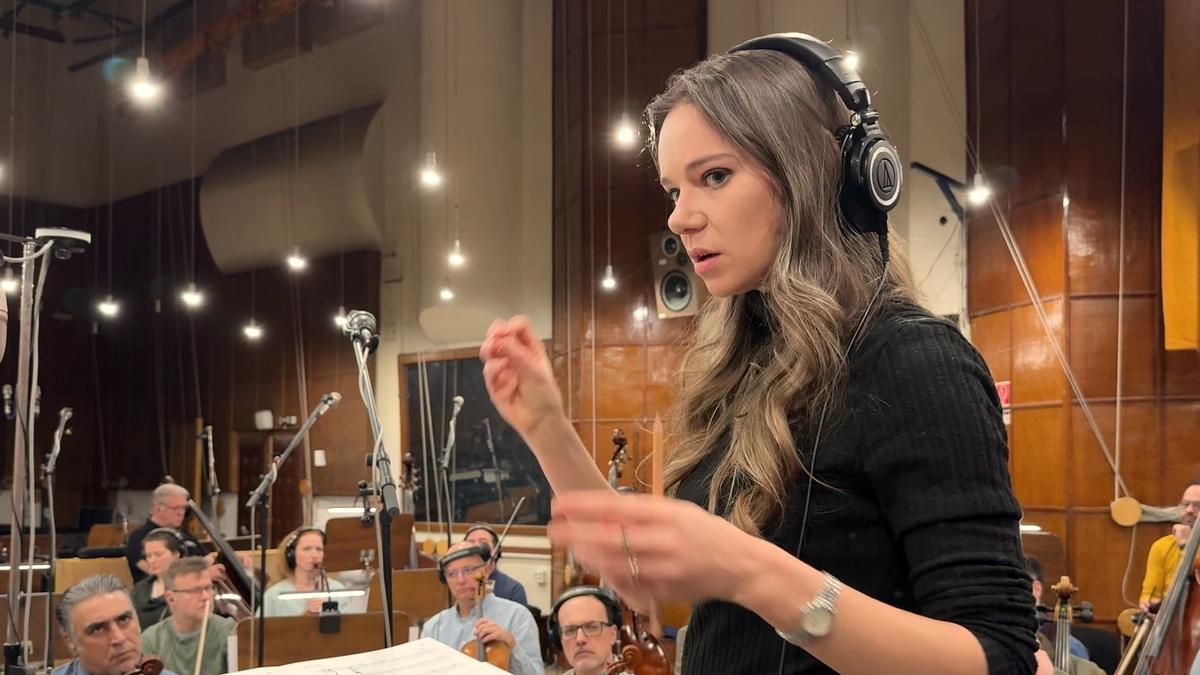
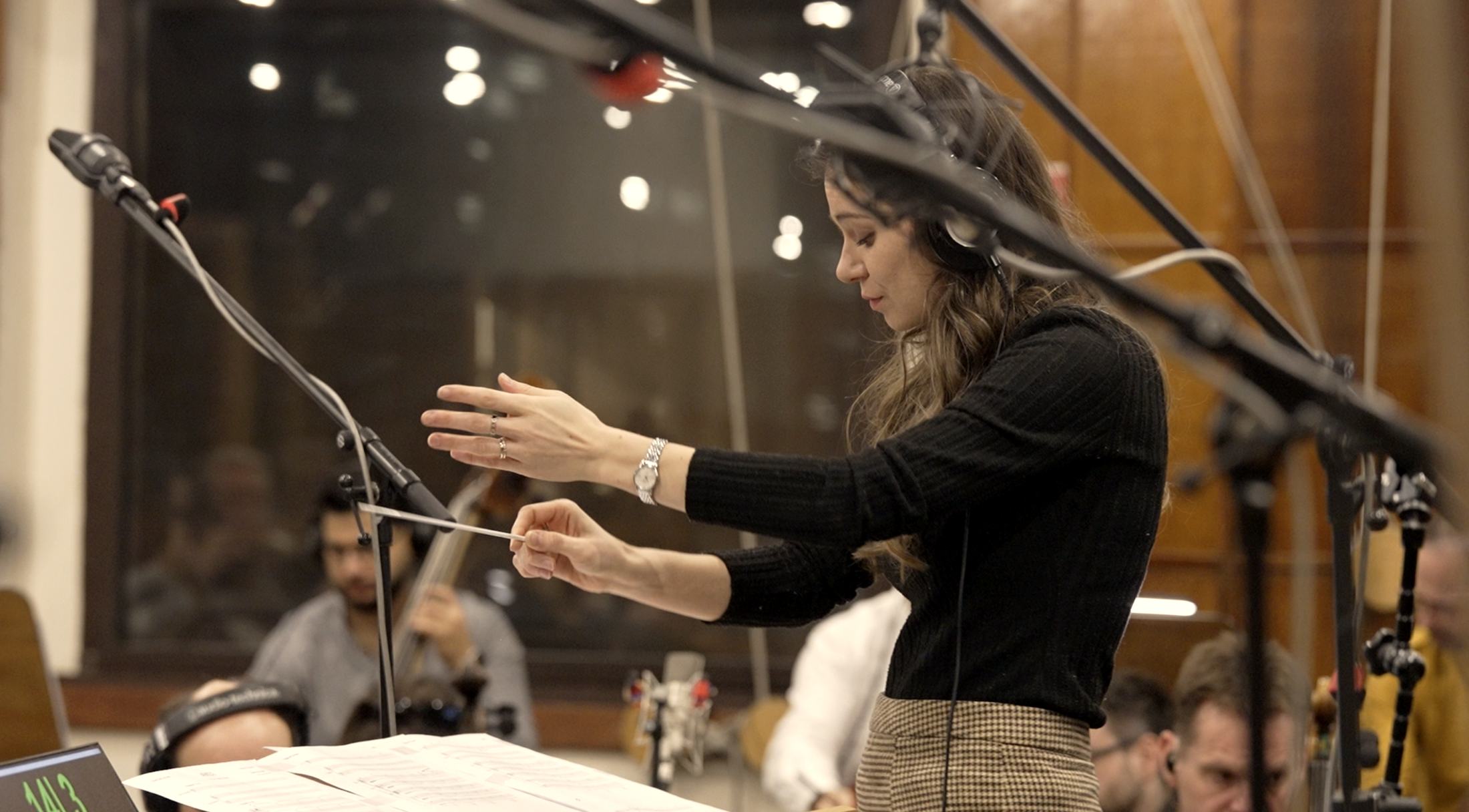
Sandrine Rudaz wrote the music and conducted the fifty-two players in Budapest. The album accompanies Bob Degus’s documentary of the same name.
One piece from each, and one of the mantras.
The first theme born from this album. A spare, powerful short melody that carries the weight of destruction without dramatizing it. Sorrow doesn’t need ornaments. It speaks as much through silence as through sound.
A melodic theme rooted in identity and cultural memory. It tells a story of strength, solidarity, and suffering of a people who have carried their history in art for centuries, and continue to do so.
Stillness as an act of resistance. Light, breathlike, and deeply peaceful. This theme carries the radical choice to remain present and anchored when everything around you is chaos, as a return to oneself.
The theme full of love, hope, and a quiet radiance. A light that emerges not despite the darkness, but through it. A reminder that even in the depths of suffering, beauty and tenderness endure. What remains when everything else falls away? Love always remains.
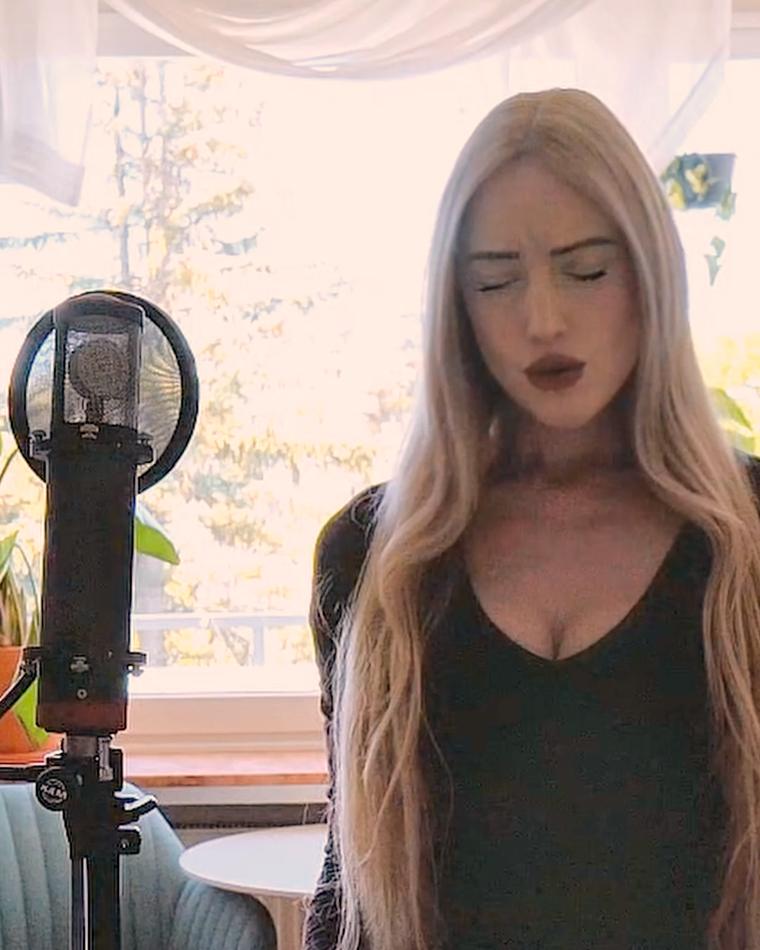
Julie Elven’s voice carries ancient mantras through the music, dissolving into the strings the way breath dissolves into silence. Simply woven in music, the way intention is woven into sound.
Hear all forty-two pieces:
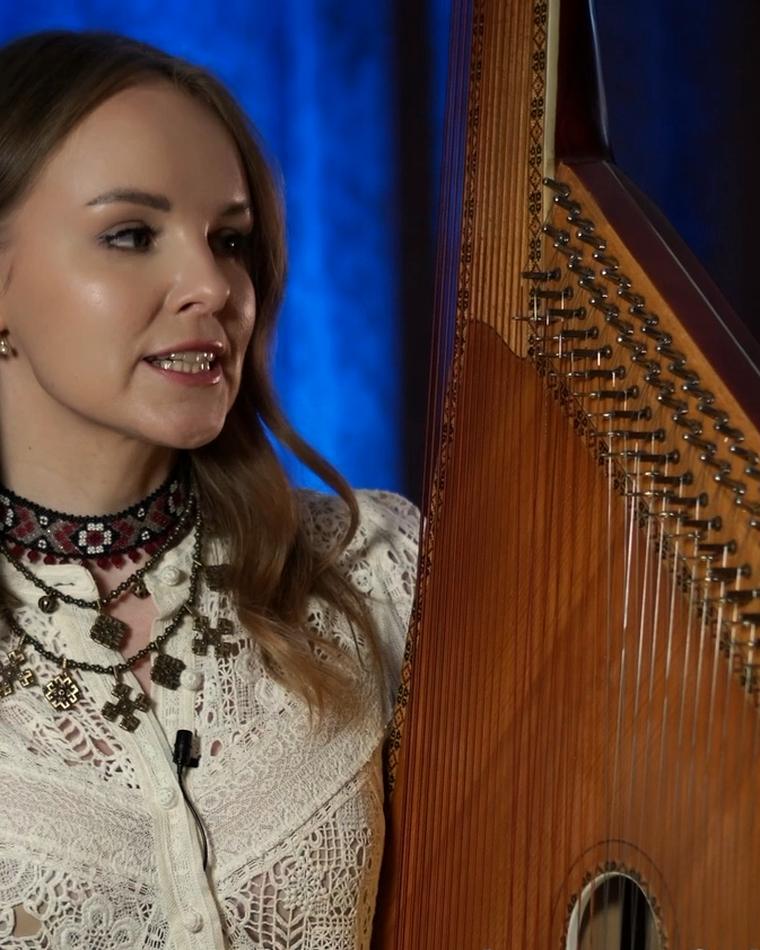
Tetiana Mazur — watch
Ukraine’s national instrument: sixty-odd strings, something between a lute and a zither. It belonged to the kobzari — itinerant singers, most of them blind, who carried Ukraine’s epic and historical songs from town to town for generations.
In the 1930s Stalin had many of them executed, their repertoire banned, and the instrument itself rebuilt to Soviet specification. It outlasted all of it.
Tetiana Mazur recorded her parts in Kyiv. Rudaz uses the instrument sparingly — in her own words, it is there when it has to be there, and not more than that.
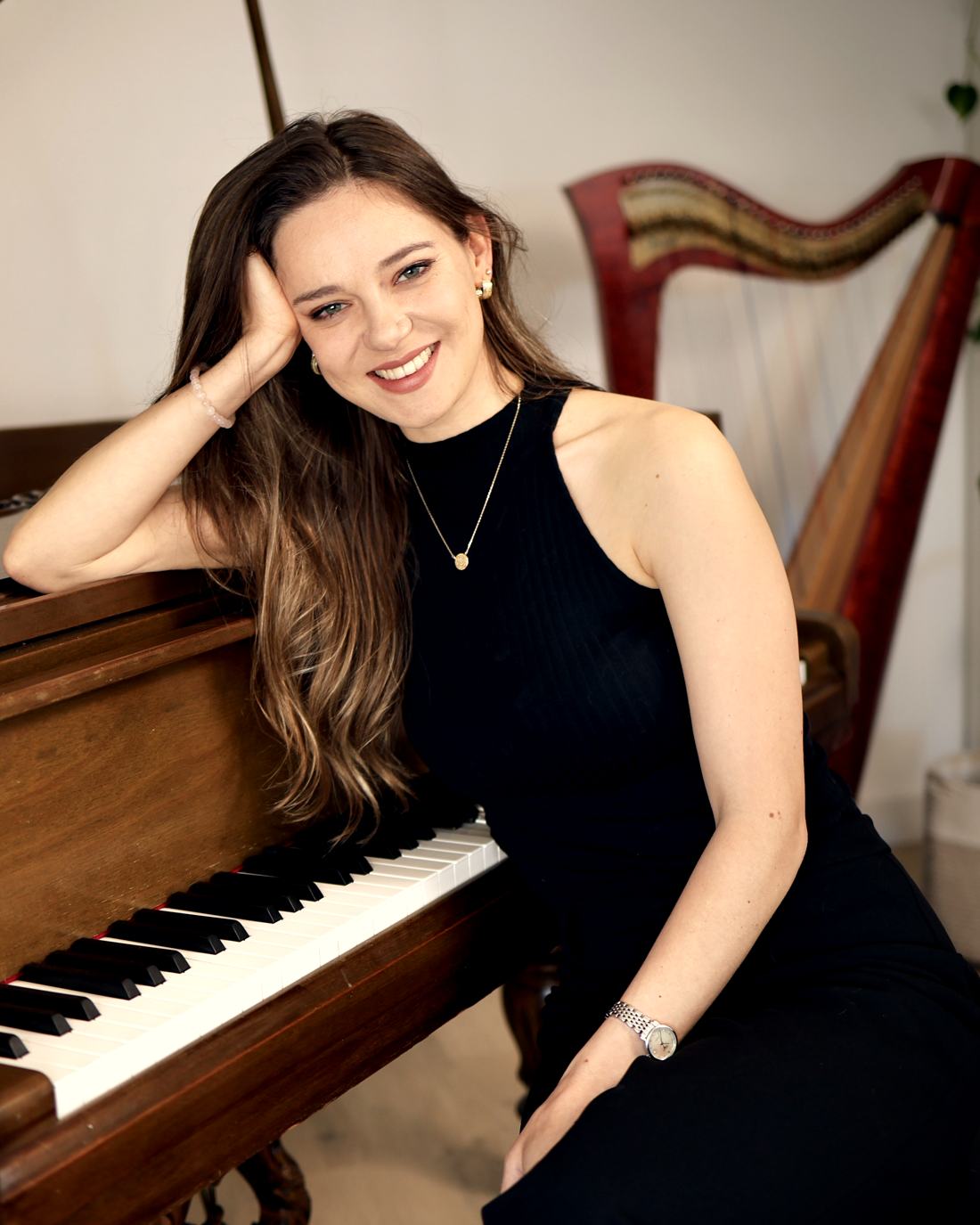
Composer & conductor
A Swiss composer and conductor. She entered the conservatory at three for classical piano and stayed fifteen years, then took a BA in Music at the Conservatory of Lausanne and a CAS in conducting at the Zurich University of the Arts. She wrote all forty-two pieces on this album and stood on the podium for the Budapest sessions. Three-time winner at the Hollywood Music in Media Awards and a Jerry Goldsmith Award nominee.
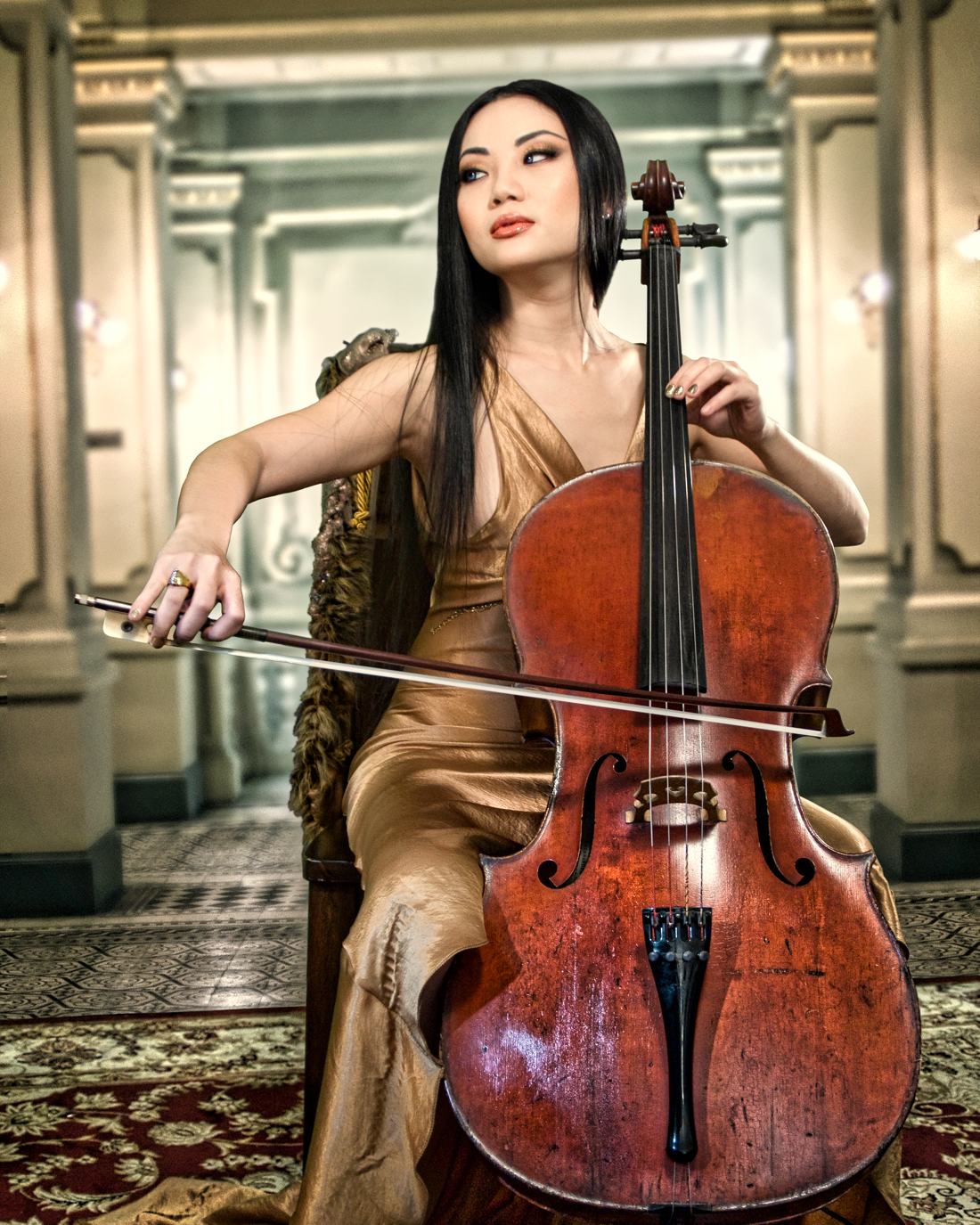
Cello
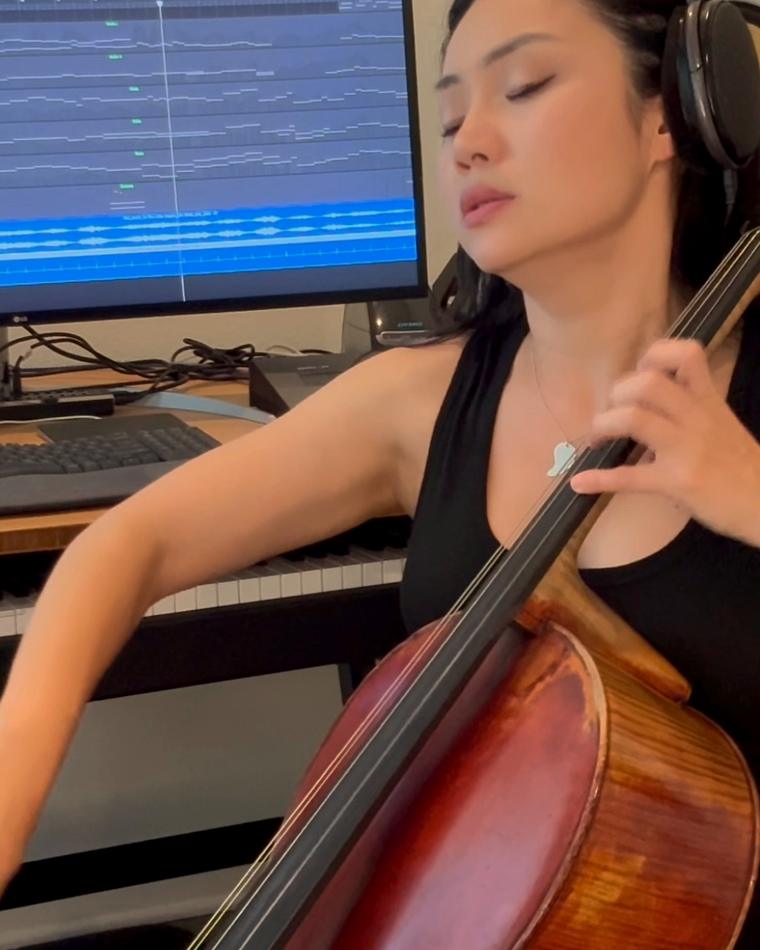
A GRAMMY®-nominated cellist whose playing carries Hans Zimmer’s Wonder Woman theme, and who appears on Inception and Dunkirk. Here she plays solo cello on twenty of the forty-two pieces.
These pieces began with the women’s own words. Most of the forty-two take their titles from something one of them said — Parents Dig to Find Their Children, Notes for My Children’s Pockets, We Are Not Afraid.
I expected to be writing about endurance. What these women actually talk about is hope, and happiness, and what they have learned in the worst years of their lives.
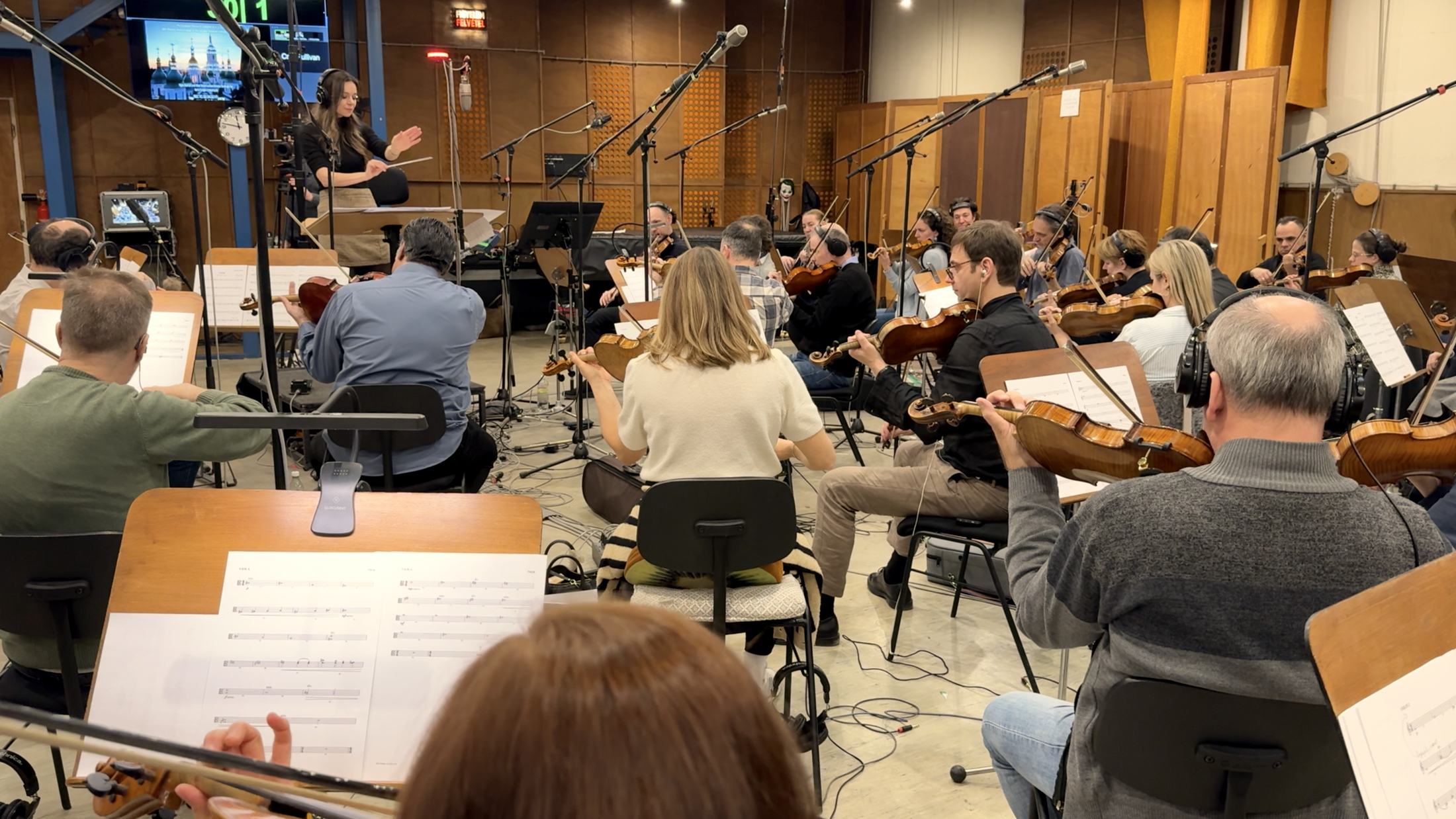
I conducted the sessions myself. What fifty-two players give you is never quite what you heard when you wrote it, and those differences are worth catching in the room rather than afterwards.
Sandrine Rudaz
The orchestra recorded over two days in March 2026 at Budapest Scoring Studio: fifty-two string players, with a quartet drawn from the same session for the pieces that needed to be more intimate. The four guest soloists recorded separately — Tina Guo in Santa Monica, Luanne Homzy in Los Angeles, Julie Elven in Munich, Tetiana Mazur in Kyiv. GRAMMY®-winning engineer Eva Reistad mixed and mastered the album.
“The goal was to make it big and wide, to open the emotions at the stronger level — the very deep of the bass, the very high of the violins. Then sometimes just a string quartet, because things were more intimate.”
Sandrine Rudaz

Yogis of Ukraine
Sandrine Rudaz
Released 24 August 2026
42 pieces · 77:05
Many of the titles come from what these women said: Olesia Stoianova, Yana Orenchyna-Kulaha, Julia Chernenko, Anastasiia Rubel, Inga Krivorot, Vladyslava Reprintseva, Daria Pokotylo and others.
Veér Csongor · Selmeczi Gábor · Szilágyiné Kirkósa Ágnes · Dulay Krisztina Judit · Veér Bertalan · Ilosfai Dorka · Gál Károly · Igaz Ibolya · Filóné Nagy Eszter · Morzsa Róbert · Gubis Géza · Makó Brigitta · Sawada Aya · Csukly Anna · Stankowsky Balázs
Horváth Róbert · Dózsa Lajos Péter · Rónaszéki Tamás · Tóth Gabriella · Kanyurszky Péter · Kalmus Boglárka · Molnár Dávid · Sándor Zoltán · Hegyi Miklós · Holló Judit · Vajda Norbert · Kiss Melinda · Draskóczy Ágnes · Szentpétery Csenge
Radnai Róbert · Sörös Jenő · Lezsák Attila · Markó János · Lukács Attila · Tuza Boglárka Mária · Rácz Katalin Edit · Nemesi Judit
Kurucz Krisztián · Gál Béla · Kószás Ágnes · Báthori Borbála · Villányi Péter · Sándor Anita
Lázár Gyula Balázs · Mohácsi Norbert · Bóni Andor · Hosszú Kristóf · Id. Puporka Jenő · Keszei Attila · Rádli Ramóna · Polonskiy Andrey · Prekup Zsolt
Hungarian personnel are listed family name first. Music © 2026 Sandrine Rudaz.
Forty-two pieces, written from what these women said, recorded by fifty-two players in Budapest.
Yogis of Ukraine · Best Classical Compendium